

The Flank Sample
Each pectoral fin takes its colour from a single coordinate on the flank beside the fin root. The judge checks for red faults on the fins against the geometric shape of each patch.
The visual patches on the body are drawn with rough, organic edges. When a ragged edge drifted across that flank coordinate, the fin turned orange or red while the judge still evaluated the root as uncoloured.
Seed 1022 produced a Champion Ginrin Orenji Hariwake with one bright orange pectoral fin. Across a benchmark of 20,000 seeds, roughly 1 in every 13 patterned koi carried a coloured fin the judge never saw, including 153 koi graded Show or higher
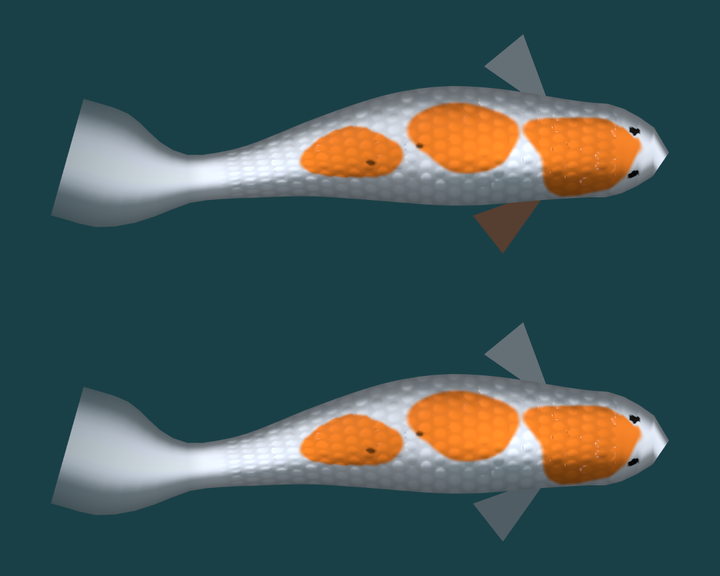
Top: seed 1022 with a rogue orange fin. Bottom: both pectoral fins clear.
Matching the Judge
The fin now follows the evaluated patch shape directly.
If a geometric patch covers the fin root, the fin takes the patch colour. If a ragged edge leaves that point uncoloured on the texture, the shader samples the pigment from the centre of the patch.
If the patch does not cover the root, the fin remains clear. If an irregular edge bleeds over the root point, the fin pulls clean white from the tail end of the pattern.
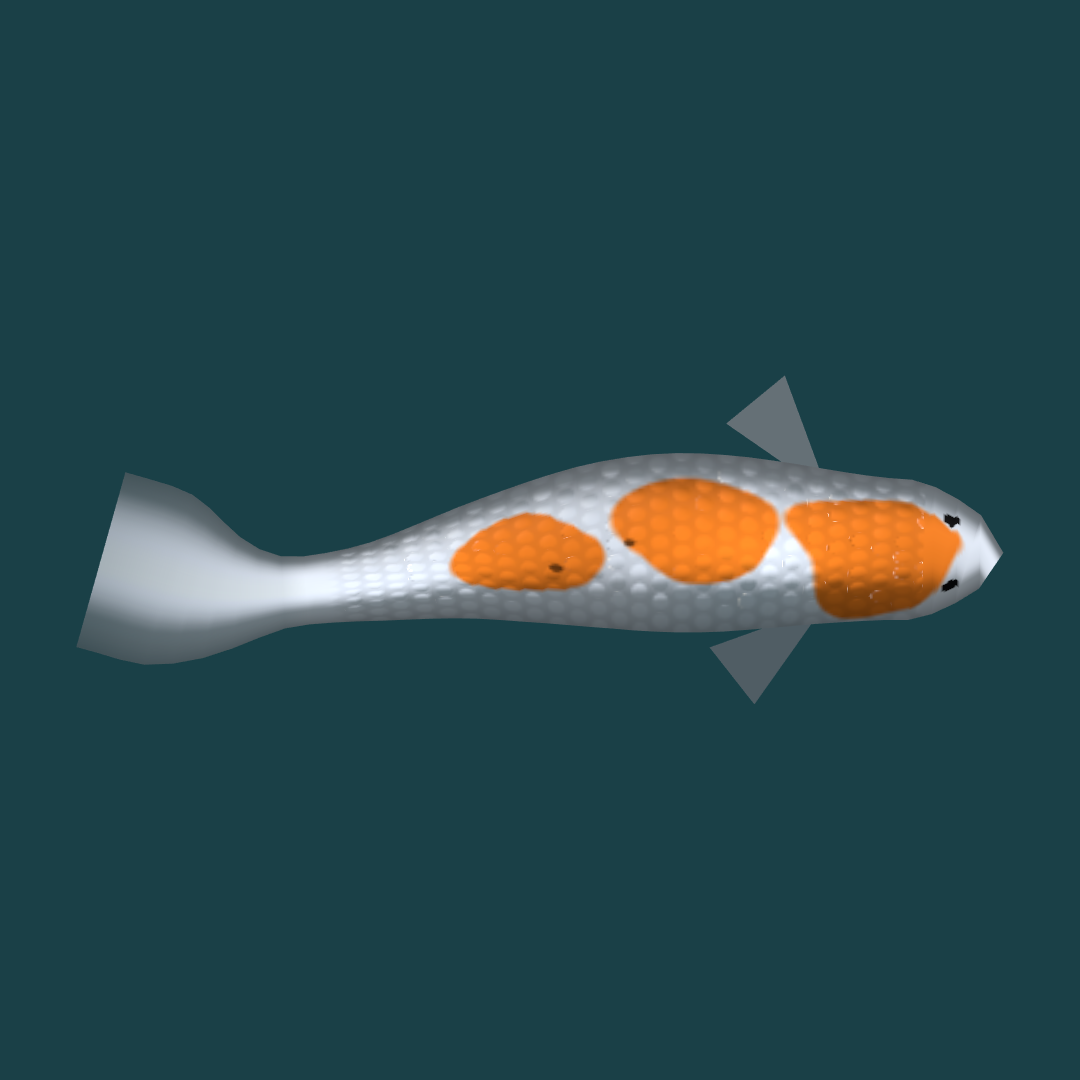
The scoring system remains untouched. Every koi keeps its grade, and only fish with conflicting fins render differently.
The Fix
// If the patch leaves the root clear, sample clean white from the tail
if (drawn < 0.05f) return flank;
var clear = new Vector2(FinU, flank.y);
return PrimaryMask(clear.x, clear.y) < 0.05f ? clear : flank;

