

The Horizon Line
At dawn and dusk, the sun meets the sea at low angles. The transition between sky and terrain clipped sharply into stark bands. The horizon read like a cut-out paper edge rather than distant air and water.
We adjusted the post-processing bloom threshold and scatter radius. Instead of burning out the horizon into pure white glare, the low sun disperses warm light across the water line and softens the transition against the sky.
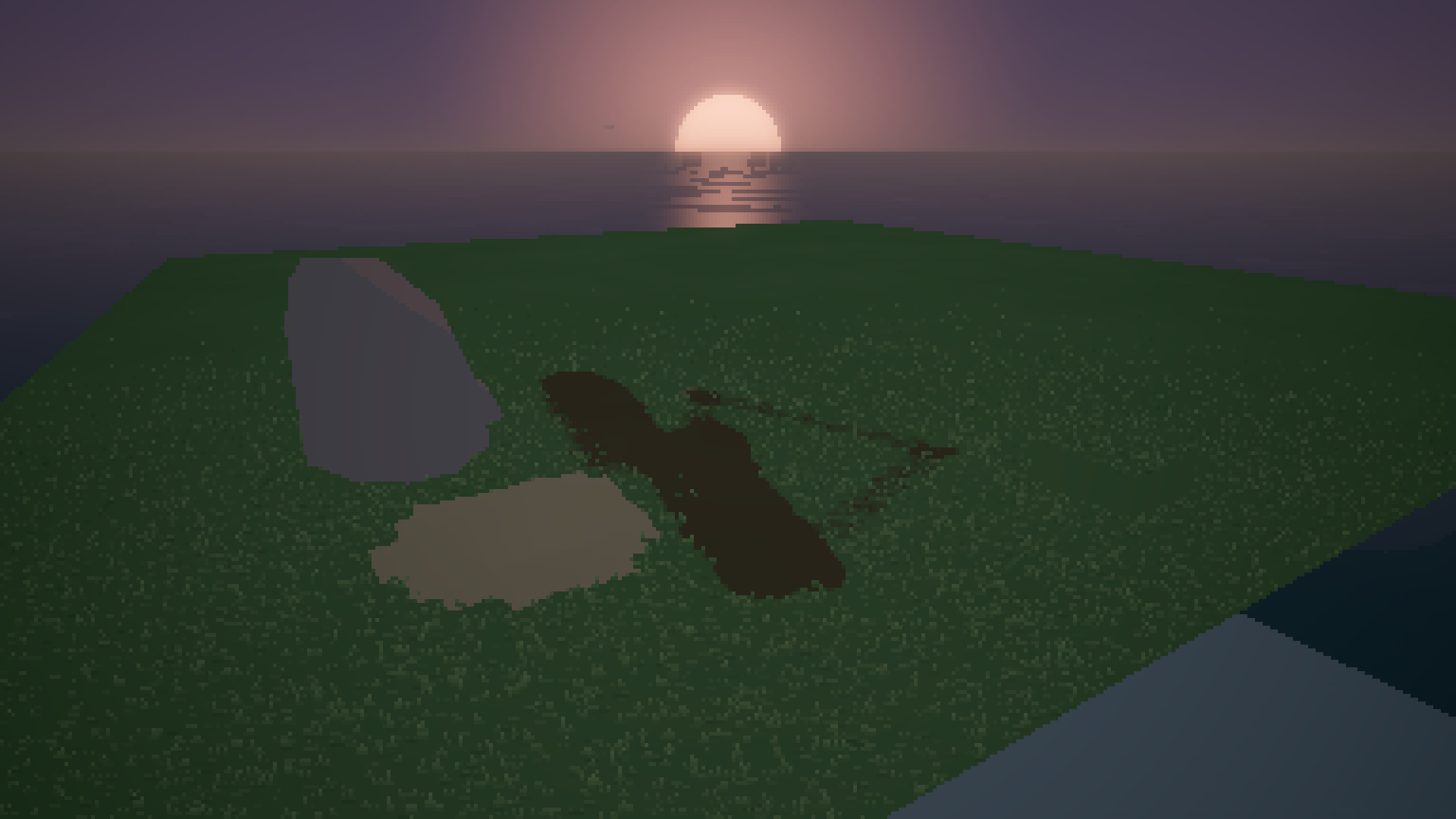
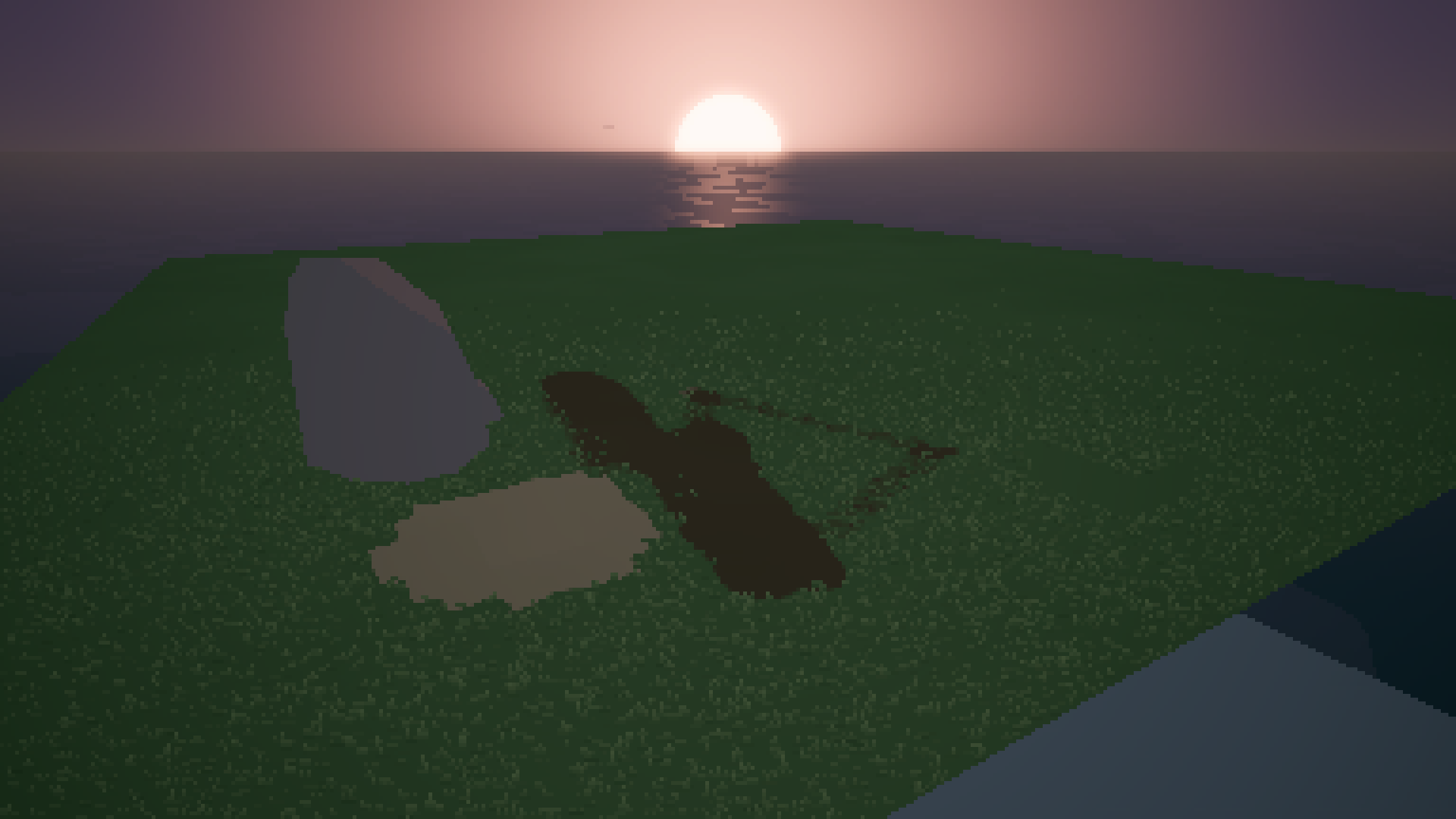
Sun and Moon Disks
The sun and moon disks need to read as radiant light sources without washing out nearby geometry.
Under the earlier settings, the sun disk blew out into an undifferentiated white sphere. The moon at night either looked like a flat painted circle or flared so heavily it obscured cloud shadows and background stars.
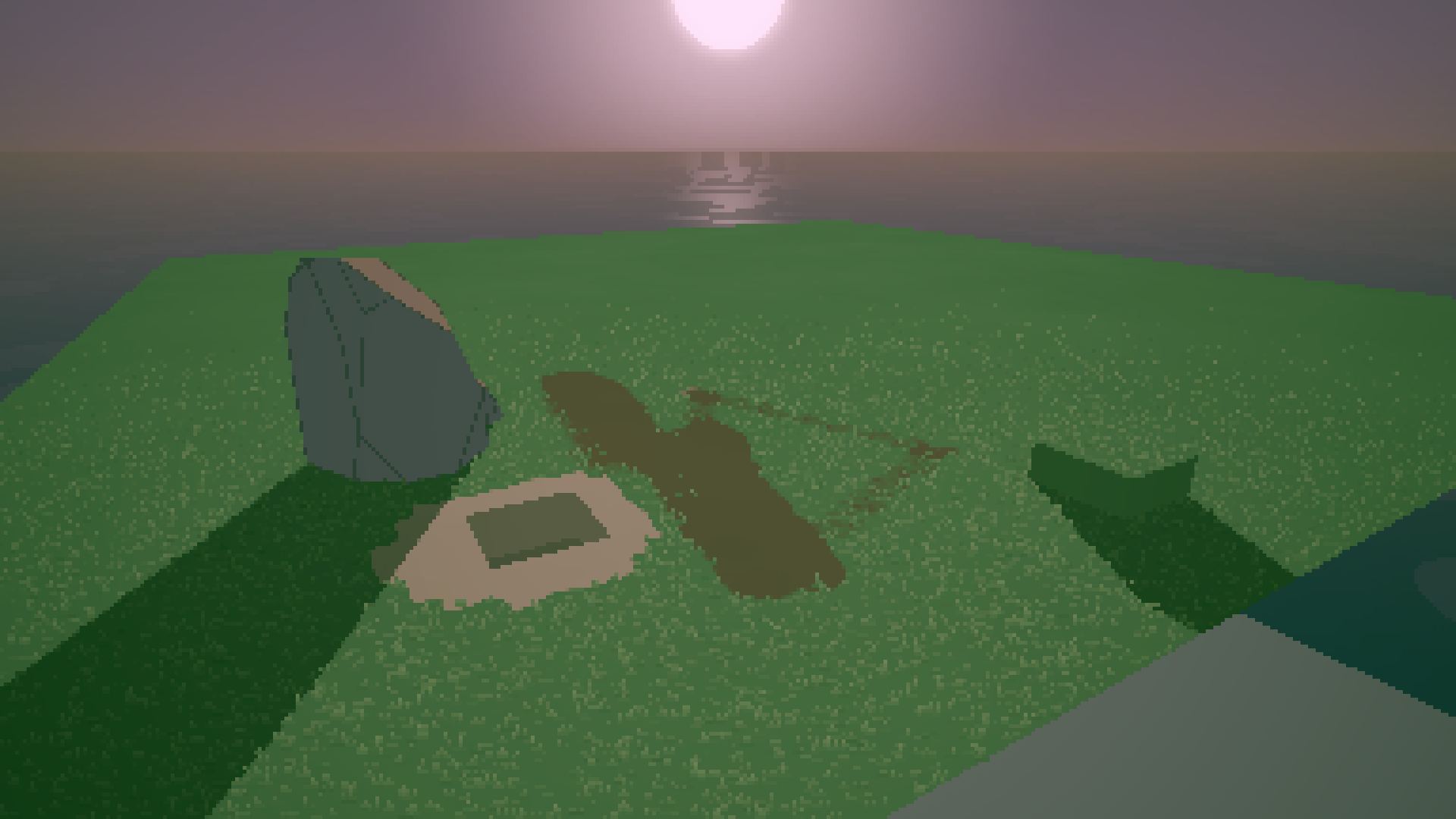
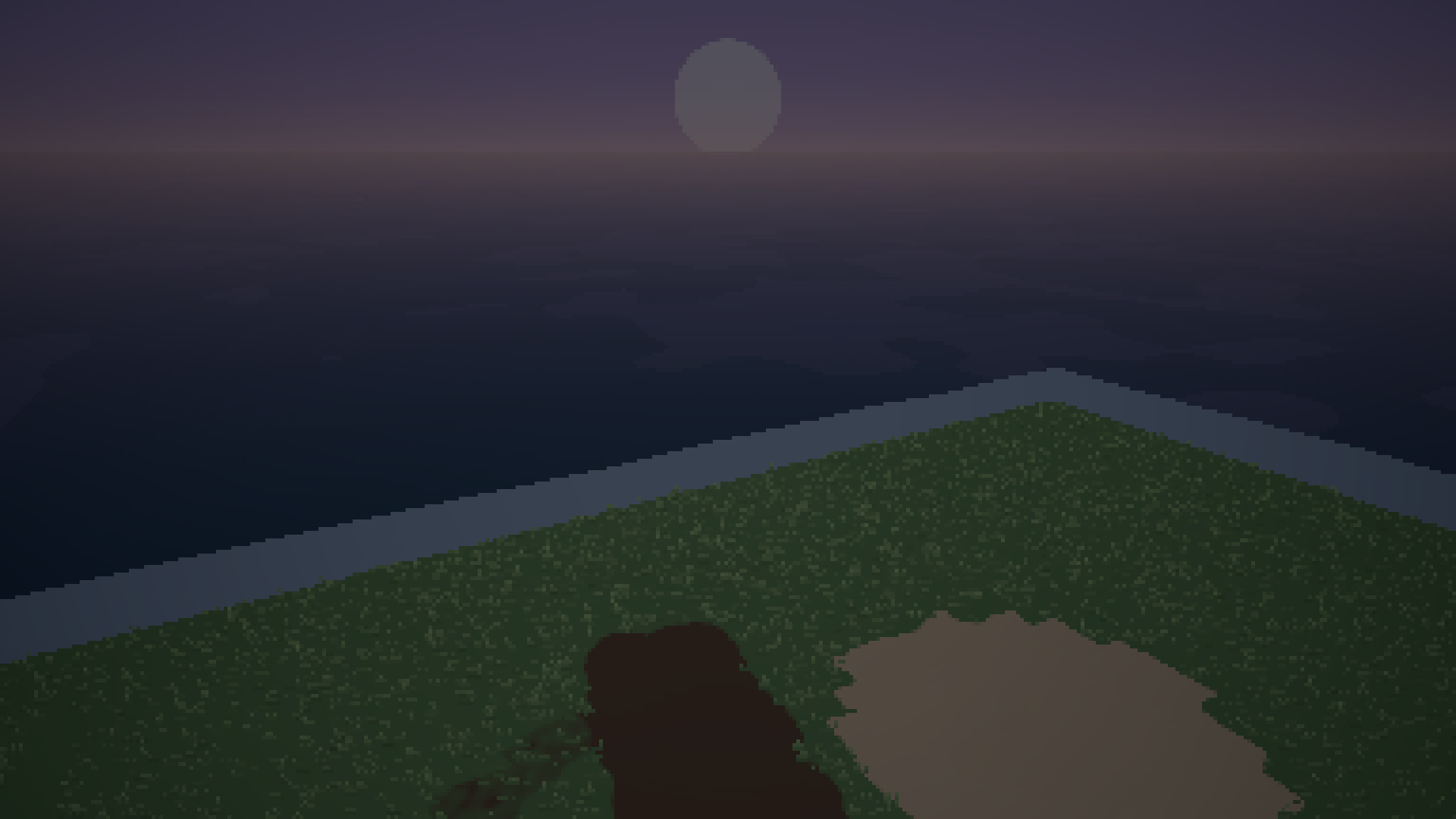
We clamped the core luminance of the celestial meshes and widened the bloom scatter. The sun disk holds its spherical boundary inside a soft radial halo, while the moon casts a subtle lunar glow without blowing out the night sky.

